
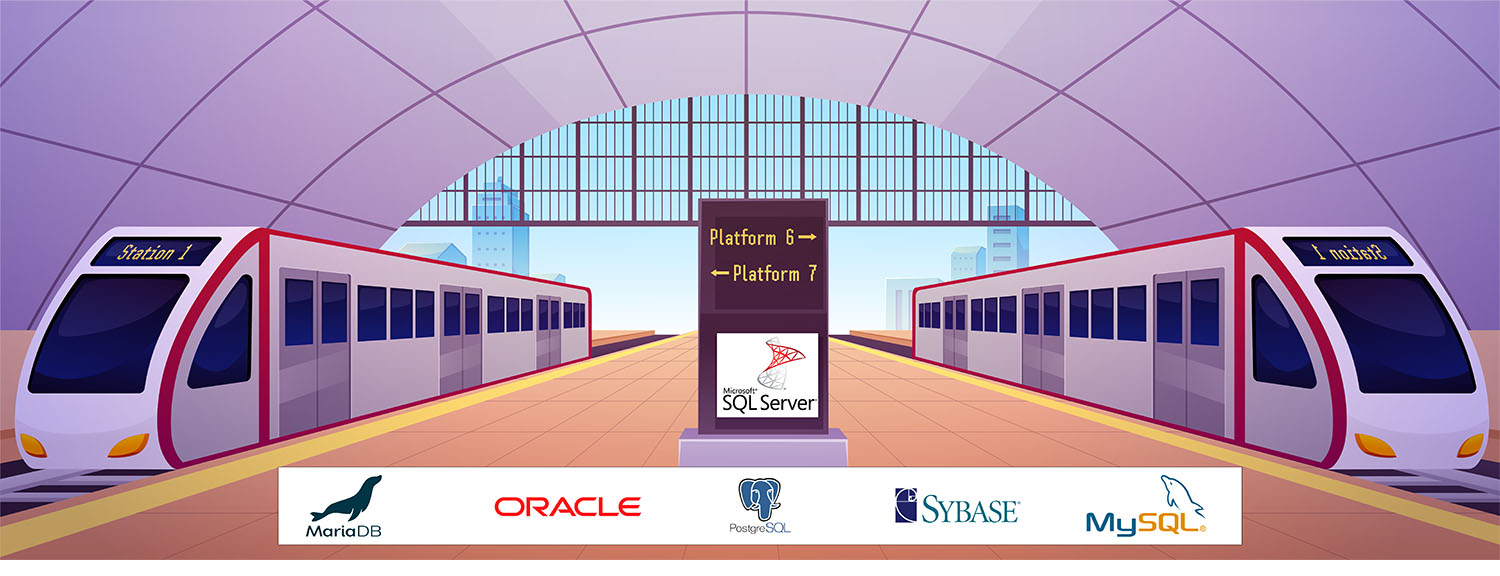
Early on, most companies run a single database platform, so investing in cross-platform database software feels unnecessary. As systems grow and age, environments diversify. Mergers and new applications introduce additional platforms, which makes cross-platform database software essential for monitoring and management.
For example, a hospital DBA doesn’t have much choice when it comes to database platforms. The X-ray machine may come with MSSQL Server, but the MRI machine has PostgreSQL.
DBAs may have a preferred database platform in a company, but when the company acquires another company, suddenly an Oracle database is added. Let’s not dig into issues at universities – you can simply imagine the legacy combinations that occur there.
Whatever the situation, the result is similar: a new platform and tool are added. And suddenly there’s a new language with a new pain given to the DBA.
In this blog, you’ll find the journey of two dbWatch customers, a large MSP and a smaller distributor, and see how they apply cross-platform monitoring in their everyday lives.
There’s a reason why these customers are anonymous. When names aren’t used real underlying issues can be discussed with candor, DBA to DBA. They’ve disclosed the real state of their business before they started cross-platform database monitoring and how their work has changed since using a monitoring tool.
Large Managed Service Provider Needs Cross-Platform Database Software
Our first anonymous example is a large MSP. We’ll call them Safely Managed Databases. The challenges they’ve experienced as an MSP closely parallel those of enterprise DBA teams. Safely Managed Databases has a diverse portfolio of clients across five different platforms: Oracle, Microsoft SQL Server, PostgreSQL, MySQL, and Sybase ASE over 11 different locations.
There were three main issues for Safely Managed Databases: VPN problems, scaling pain, and a lack of overview for their access control.
VPN Failure
Safely Managed Databases uses VPNs to connect to its customers. Unfortunately, clients used the same VPN software and share the same address, causing issues with conflicting network address space. They had to use jump stations to separate the client systems additionally not all VPNs could be connected simultaneously.
Because of all the network fragmentation, different VPN’s and jump stations, they lacked overview of all their clients.
Incident System Failed to Scale
When they installed a new database, the DBA added their own monitoring script. Soon the alerting system turned into a fragmented mess because each script had a different threshold and unique warnings and alerts. With each alert, a new ticket was sent to the DBA responsible.
Most days, an alert appeared every 20 seconds, adding up to over 4,000 daily alerts. There was never time to dive into the issue and discover if it was a critical alert. The ticket could be for something crucial, like a blocked database, or something irrelevant, like an unimportant script that had never worked but triggered alerts every 10 minutes.
Soon alert fatigue lead to all alerts being ignored. They only found problems when systems crashed or noticed blocked queries when someone complained. When they did know about a problem, they had to log on to the correct platform, remembering to log out of the conflicting VPNs.
Access Control
Role-Based Access Control (RBAC) was, quite honestly, a mess. It was easy to grant access, but difficult to track who had it. Removing someone’s access involved resetting database passwords, a painful process that always locked out someone or some script that should have had access.
In addition, each platform had its own roles, naming, and permission granularity. This resulted in too many users’ orphaned accounts after off-boarding, and there was no single view of who could do what.
In addition, there wasn’t any overarching auditing to track who made which changes when. They had an Excel sheet that was forgotten half the time.
Cross Platform Database Monitoring for Managed Service Providers (Or Enterprises)
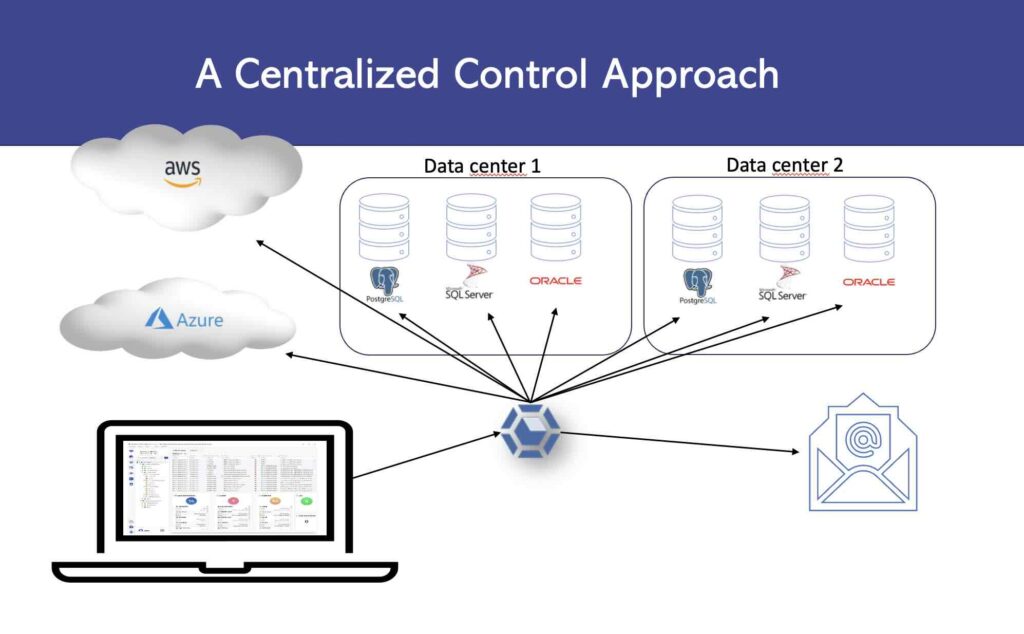
When Safely Managed Databases decided to look for a tool, they knew the most critical factor for them was the cross-platform database monitoring capability. They needed to see everything in one place. They also wanted a better, more secure solution than VPNs for connecting to their clients.
Replace VPNs with Cloud Router for Secure Connections and Access Control
One of the reasons that Safely Managed Databases chose dbWatch was their Cloud Router add-on. This allowed them to replace VPNs with a secure one-way connection from their environments to the Cloud Router. All the clients are connected at the same time, and they each have their own security bubble.
Instead of handing out passwords, the DBAs can generate a dbWatch account and control what type of access is granted and where the account holder has access.
Preventing Alert Fatigue with Cross-platform Templates
Each morning used to start with an inbox stuffed with alerts, but now the team only hears about true issues. When they set up dbWatch, they used templates with built-in across-the-board adjustments, so the alerts were consistent across all their database instances. The standardized alert thresholds filter out the non-essential problems.
With the thresholds in place, they fine-tuned the templates. For example, they’ve adjusted the timing. On the weekends, critical alarms are sent to a weekend on-call email account. The non-critical alarms, like warnings on development systems, are waiting in the inbox on Monday morning. Non-DBA issues, like disk alarms, are sent directly to the person responsible, saving everyone time.
Having a clear cross-platform monitoring overview has helped them move into a more proactive workflow. They can see upcoming issues, prioritize them, and schedule when to fix them before it’s a ‘red alert’. Now the DBAs are on top of the workload instead of crushed under it.
Cross-platform Monitoring Provides Team Resiliency
Prior to dbWatch they couldn’t help each other directly with cross-platform problems. Now they can work in each other’s areas without issues. They have safer handoffs and coverage when someone is out.
Regional Auto Parts distributor with 200 Percent Platform Fragmentation.
Now let’s move on to a smaller company, a regional auto-parts distributor. This too is an anonymous company, who is off record to report real problems. We’ll call them Custom Auto Parts. The reason why they needed cross-platform capabilities is mostly related to platform fragmentation.

Lack of overview
When they started 20 years ago, they had an Oracle database. A decade later, they added an MS SQL database, and five years ago they added a PostgreSQL. Working with three platforms is a challenge for the sole DBA. While the work needed is the same, the commands, like ‘kill session’ aren’t.
The DBA did his best to manually check three platforms daily. However, when he put out a fire or was on holiday, checks were skipped.
While Custom Auto Parts is a small company, fragmentation has increased by 200% and the headache from the organizational database fragmentation is proportionally just as large.
Time to resolution
It took a long time to reach a resolution because of fragmentation. From the website, they could see that data wasn’t syncing. But, because data was pushed in multiple directions, it was difficult to find the root cause when data didn’t arrive. Sometimes when a query doesn’t work, the DBA had to look through each database to find the root cause of the problem.
Cross-platform Database Monitoring Benefits for Smaller Companies
The new tool was deployed in one day. It brings all platforms into one view so the sole DBA is not switching between consoles. Defined checks run consistently, even when work is hectic or someone is away. Custom Auto Parts is now seeing issues sooner and acting with more confidence.
Cross-platform Visibility when Monitoring
With a small diverse environment, it’s tough for one DBA to learn many platforms and keep them updated, working in different places on different tools.
Where before they had to run checks manually, now they have everything seen in a single pane of glass. What used to take five hours a week is now just a glance at the screen.
Time to resolution Resolved
The team implemented a customized monitoring job to alert when the synchronization of data failed. They could quickly locate the issue and its location.

What Changed with Cross Platform Database Monitoring
Safely Managed Databases and Custom Auto Parts were able to replace scattered tools with one console for alerts, history, and reporting. The result was a faster, quicker, and more predictable operation.
A single console reduces operational risk and total effort while improving stakeholder confidence.
Lower risk
Fewer blind spots
- Consistent coverage during leave
- Clear audit trails
Lower costs
- Fewer overlapping tools
- Shorter report prep
- Accessibility
FAQ Cross-platform Questions
What is cross-platform database monitoring?
- It is the ability to see and manage database health, alerts, and trends for many platforms, clouds, and sites in one console with consistent workflows.
How does operational database fragmentation affect teams?
- It slows investigations, increases missed checks, and raises tool costs. A unified console restores visibility and makes daily work consistent.
How does database estate management help leadership?
- It provides a single source of truth for inventory, health, and trends across systems and locations. Reports are consistent and ready for audits.